If you’ve recently had a rock chip turn into a massive crack or had your entire windshield replaced, you might have heard your technician mention something called ADAS calibration. At first glance, it sounds like one of those “extra” services that shops try to tack onto your bill. You might even find yourself wondering, “The glass looks perfect, so why do I need to calibrate a camera that was working fine yesterday?”
At One-Stop Auto Cares, we believe in being straight with our customers. We aren’t here to sell you things you don’t need. However, when it comes to Advanced Driver Assistance Systems (ADAS), skipping this step isn’t just a matter of “maintenance”, it’s a matter of safety. If you drive a modern car, truck, or SUV, that piece of glass is doing a lot more than just keeping the wind out of your face. It’s actually a vital part of your vehicle’s “brain.”
What Exactly is ADAS and Why Is It Watching the Road?
Most vehicles manufactured in the last decade, especially the Asian and domestic brands we specialize in, like Toyota, Honda, Ford, and Chevrolet, come equipped with ADAS. These systems include things you probably use every single day, such as:
- Lane Departure Warning: That beep or steering wheel vibration you feel when you drift over the line.
- Automatic Emergency Braking: The system that slams on the brakes if it senses a car stopping suddenly in front of you.
- Adaptive Cruise Control: The magic that keeps you at a safe distance from the car ahead without you constantly tapping the brakes.
- Forward Collision Warning: Those flashing red lights or sounds that tell you a crash is imminent.
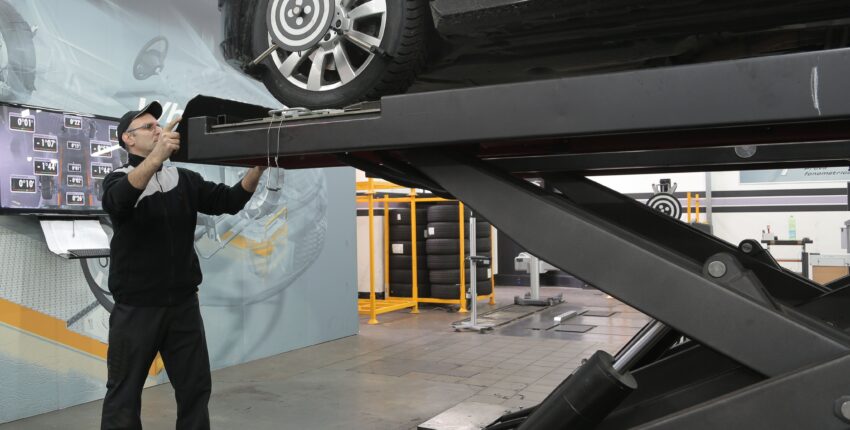
Most of these features rely on a small, sophisticated camera mounted directly against the inside of your windshield, usually tucked away behind your rearview mirror. When everything is aligned correctly, your car “sees” the road perfectly. But even a tiny change in that camera’s perspective can lead to big problems.
The Windshield Connection: Why New Glass Changes Everything
You might think that if the camera hasn’t been moved, it shouldn’t need to be adjusted. However, windshields aren’t just flat pieces of glass. They have specific curvatures and thicknesses, and even the highest-quality replacement glass can have microscopic variations from the factory original.
When a technician removes your old windshield and installs a new one, the mounting bracket for that camera is disturbed. If that camera is off by just a fraction of a millimeter, its field of vision at 100 feet down the road could be off by several feet. Imagine trying to walk a straight line while wearing glasses that are slightly crooked; you’d eventually find yourself stumbling. Your car does the same thing.
For drivers in the local community who rely on their vehicles for daily commutes, having these systems functioning correctly isn’t just a luxury. It’s often the difference between a close call and a visit for major auto repair.
Sensory Cues: How to Tell if Your Calibration is Off
If you’ve skipped calibration after a windshield repair or replacement, your car might start acting… well, weird. Since we act as your trusted advisor, we want you to be able to “hear” and “feel” what your car is telling you. Pay attention to these warning signs:
- Ghost Braking: You’re driving down a clear road, and suddenly the car jerks or applies the brakes for no reason. This usually happens because the camera misidentified a shadow or a distant object as a hazard.
- Lane “Ping-Ponging”: If your car has lane-keep assist, it might start bouncing you back and forth between the lines like a pinball rather than keeping you centered.
- The “Blind” Adaptive Cruise: You notice your car isn’t slowing down as early as it used to when approaching another vehicle, or it’s following much closer than the setting suggests.
- Dashboard Warning Lights: Often, the computer will realize the data it’s getting doesn’t make sense and will simply disable the system, leaving you with a glowing warning light on your dash.
Ignoring these signs is risky. Much like how you wouldn’t ignore squealing brakes that need attention, you shouldn’t ignore a safety system that’s essentially “hallucinating.”

Specialization in Asian and Domestic Vehicles
At One-Stop Auto Cares, we’ve spent years mastering the specific technical requirements of Asian and domestic brands. Whether you’re driving a reliable Honda Civic, a rugged Ford F-150, or a family-friendly Toyota Highlander, we know exactly how these manufacturers want their systems calibrated.
Unlike luxury-only shops that might charge a premium just for the name on the door, we focus on the vehicles that power our community. We understand the specific software quirks of a Chevrolet versus a Kia, ensuring that when you drive away, your safety systems are looking exactly where they need to be.
Our team is also officially certified for Vehicle Safety Systems Inspections (VSS), which is particularly important for those dealing with salvage titles or comprehensive safety checks. We don’t just “reset” the system; we ensure it meets the strict standards required to keep you and your family safe on California roads.
Making Safety Affordable: Financing Your Repairs
We know that unexpected car repairs, especially those involving high-tech sensors and windshields, can put a strain on your budget. It’s frustrating when you just want to get back to work or get the kids to school, but your car is demanding a specialized service.
That’s why we offer flexible financing options through EasyPay Finance and Snap Finance. We believe that quality auto care should be accessible to everyone, regardless of the size of the repair. These options allow you to break down the cost into manageable monthly payments, so you don’t have to choose between your bank account and your safety. Whether you’re here for a complex ADAS calibration or just a standard California smog check, we’re committed to making the process stress-free.
The Bottom Line on ADAS Calibration
So, do you really need ADAS calibration? The short answer is yes. If your vehicle is equipped with forward-facing cameras and your windshield has been replaced or even significantly repaired, calibration is the only way to ensure those safety features work when you need them most.
Think of it this way: the ADAS system is your car’s co-pilot. If the co-pilot is looking in the wrong direction, they can’t help you avoid a collision. Taking the time to perform a professional calibration isn’t just about following manufacturer guidelines: it’s about ensuring that your vehicle remains the safe, reliable tool you need it to be.
At One-Stop Auto Cares, we take pride in being a helpful hand for our neighbors. We’ll never push a service that isn’t necessary, but we will always tell you the truth about what keeps your car in peak condition.
Ready to ensure your vehicle’s safety systems are performing at their best? Give us a call or stop by to chat with our expert team about your ADAS needs. We’re here to help you navigate the high-tech side of modern driving with ease and transparency.